Fabrizio Collini’s orphaned status
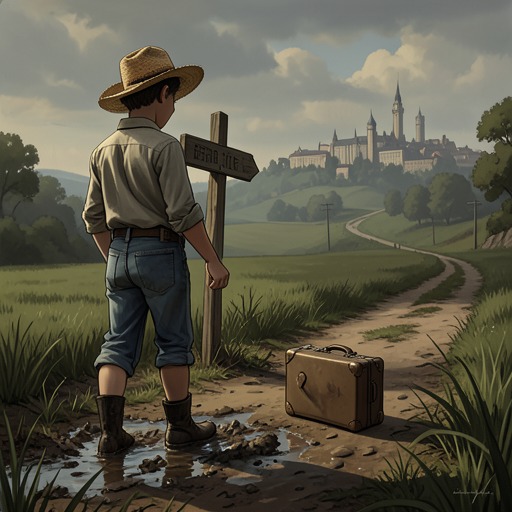
The Collini CaseFabrizio Collini’s orphaned status is not a single loss but a sequence of family ruptures under German occupation: his mother had died giving birth to him, his father was taken away, and his sister was killed in an attack on the farm. With their home burned and their only remaining close relative, Uncle Mauro, eventually making him his son, Fabrizio’s childhood is abruptly remade by war and bereavement.
Family Background and the First Loss
Fabrizio barely remembered his father’s two brothers, who had fallen three years earlier in the Italian campaign against Greece. He did remember his father’s tears and the word he repeatedly used for war: madness. By the time German forces were everywhere in uniform, village adults whispered about partisans and attacks; even the children’s games had changed from cops and robbers to partisans and Germans. Fabrizio’s father sometimes put on a grey coat and beret, kissed his children, and left the farm. His sister eventually whispered to Fabrizio that their father was a partisan. Their mother had died when Fabrizio was born, leaving the siblings dependent on their father and one another.
One day Fabrizio returned to find his sister crying at the farmhouse. She told him that the Germans had taken their father. When a German soldier returned, she urged Fabrizio to run; he hid in an empty dog kennel beneath a dirty, hole-ridden blanket. Hearing his sister scream, he came back to the kitchen and saw her pinned on the table while the soldier threatened her with a pistol. Fabrizio’s scream startled the man. The sights of the pistol caught on the gold chain and enamel locket his sister wore, and the gun discharged, killing her. The violence made the children’s earlier talk of partisans and Germans into an immediate destruction of family and home: Fabrizio had lost his sister, while his father remained in German custody.
From Bereavement to Adoption
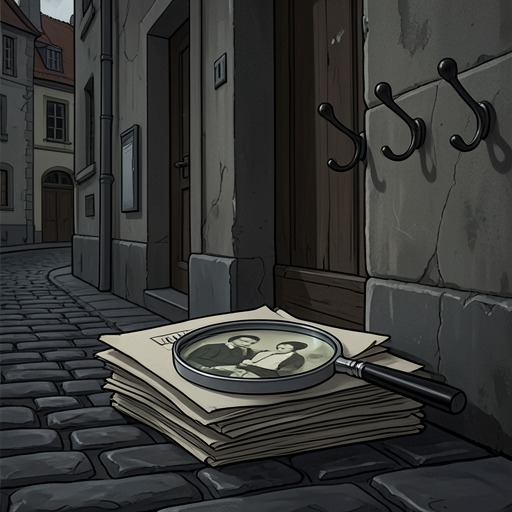
The damage to Fabrizio Collini’s family became tangible in the ruined farm and in the official paper that Uncle Mauro brought back from Genoa. Mauro had gone in his best suit, carrying trays of eggs for relatives in the city; after four days away, he returned tired, with pinching shoes and a stained suit hanging crookedly on his shoulders. He had not been allowed to see Fabrizio’s father, but he had learned where the Germans were holding him. The document was thin and stamped with swastikas. It identified the prison in Genoa’s Marassi district and said that the arrest had been ordered by a German Security Service detachment in Milan.
The paper also named the man in charge of the prisoners: SS-Sturmbannführer Hans Meyer. Mauro traced Fabrizio’s father’s name with his fingers as he read, while the adults tried to make sense of the document together. For the boy, the father who had vanished from the farm was no longer simply missing; he was held in a named prison under the authority of a named German officer. The farm’s destruction and the family’s separation were tied to an occupying apparatus that could be traced through its own paperwork.
The account later returns to the interpreter who had witnessed the prisoners’ fate. After telling his wife what had happened in a ravine, he gave her a list of the prisoners’ names that he had brought away from the prison. She read the first name aloud: Nicola Collini, Fabrizio’s father. Four days later, news reached the village. That night Mauro bent over the sleeping boy, kissed him on the eyes, and told him that from then on he would be his son. The declaration gave Fabrizio a surviving parent in the place of the family he had lost; it did not restore his sister, his father, or the burned home, but it changed his orphaned condition into a new kinship with his mother’s brother.
Witness, Memory, and Historical Consequence
The account of Fabrizio’s father’s fate is set against the interpreter’s memory of the ravine where prisoners were killed. He saw a very young soldier fire, and understood that what had happened was no longer battle between combatants but people killing other people. The scene stayed with him; afterward he avoided going home and went instead to the sea, unable to face his wife and children. In 1945, the Extraordinary Court in Genoa condemned the interpreter to death. The narrative supplies no further detail about that sentence, but his witness links Fabrizio’s family loss to a wider chain of wartime violence and its aftermath: the boy’s orphaned life emerges not from one isolated misfortune, but from events whose participants and consequences extend well beyond the farm.
The Farm After the Violence
When Fabrizio was told that the farm had burned and his sister was dead, he asked whether she had burned too. Uncle Mauro answered yes. Later, as they sat together, Mauro pulled his coat over the boy’s head; the wool was warm, though itchy against his throat. The small gesture offered shelter without undoing what had happened, and the boy’s question fixed the destruction of the farm to the fate of his sister.
The next day, Uncle Mauro went to Genoa in his best suit, while Aunt Giulia and Fabrizio stood on the steps to wave him off. In his absence, the older farm labourer took care of the work around the farm, and the younger went to the local police station to report what had happened. Ordinary signs of farm life returned amid the burned walls: the chickens came back the following day, and a labourer found one of the pigs in the forest. The old priest visited Fabrizio with chocolate and gave him a rosary with a small silver cross. These acts of care did not restore his family or home, but they show the practical and communal world gathering around him after the loss.